
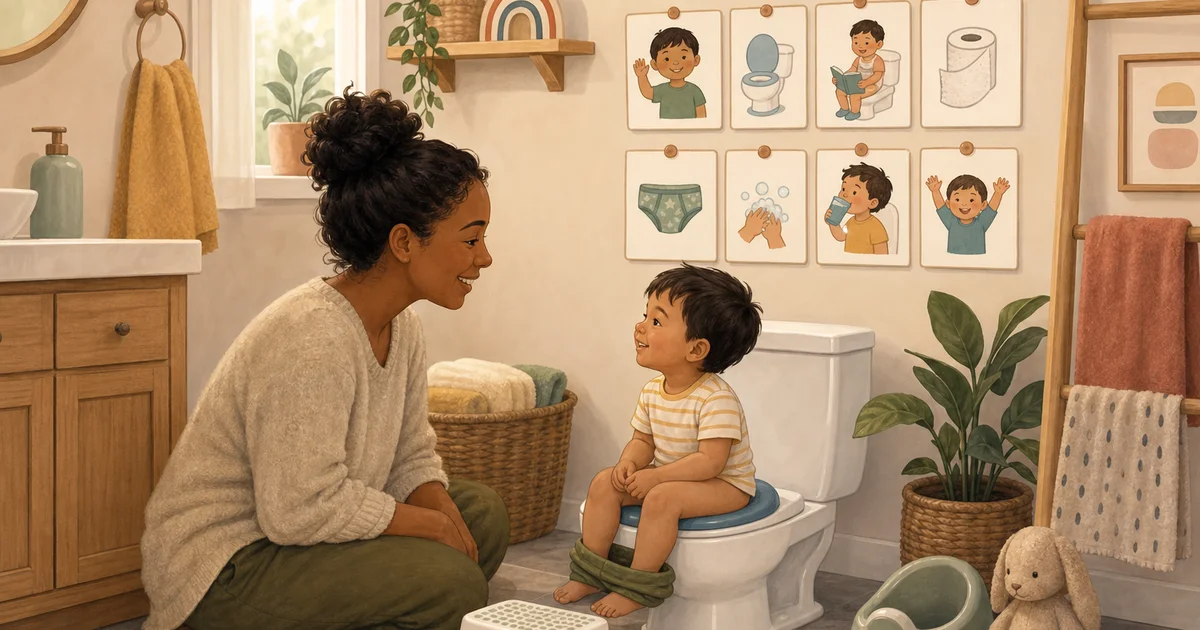
Toilet training is one of the milestones parents watch closely. With autistic children, it often arrives later, unevenly, or only after many false starts — not because anyone failed, but because the skill bundles body awareness, language, flexibility, sensory tolerance, and motor planning at once.
This guide offers a low-pressure sequence you can adapt at home, including how timed prompts and simple logging help families stay consistent. It is educational support, not medical advice. Talk to your pediatrician if there are pain, constipation, blood in stool, or developmental concerns that may block progress.
Key takeaways
- Delays usually reflect sensory, motor, and language load — not laziness or “bad parenting.”
- Build toilet familiarity before you demand dry pants or clean underwear.
- Accidents are data. Stay neutral, change clothes, and look for time-of-day patterns.
- Urine success often comes first; bowel training may take months longer.
- Timed prompts (for example every 30–60 minutes) help when the child does not yet feel fullness reliably.
- Quiet hours protect sleep; overnight training is a separate decision.
- Pause if the toilet becomes a daily meltdown center or medical issues appear.
- Structure tools — picture schedules, short phrases, and a simple log — reduce guesswork for the whole family.
If you want a structured helper for intervals, quiet hours, and weekly stats, see Toilet Trainer on NeuroDifferent, or open it from My Apps after you sign in.
Why toilet training can be harder
Several pieces must work together:
- Interoception — feeling that the bladder or bowel is full before an accident.
- Motor skills — getting to the toilet, managing clothes, sitting long enough.
- Sensory tolerance — toilet seat texture, flush noise, cold bathroom, hand drying, bright lights.
- Language and visuals — understanding what “potty time” means and what to do next.
- Flexibility — using toilets outside home, not only one familiar bathroom.
- Attention and transitions — leaving a preferred activity when a prompt arrives.
If any piece is missing, accidents continue even when a child “knows” the idea in theory. A child may recite the steps and still wet five minutes later because the body signal never arrived in time.
Signs your child may be ready
Readiness looks different from checklists in parenting books. Useful signals include:
- staying dry for an hour or two sometimes;
- showing discomfort after wetting or soiling (or clear avoidance of wet clothes);
- tolerating sitting on the toilet briefly, even fully clothed at first;
- interest in watching a parent or sibling use the bathroom;
- following a short bathroom sequence with a picture card.
If none of these appear yet, short positive exposure beats daily battles. Readiness weeks matter more than calendar age. Some autistic teenagers still need support with night dryness or public toilets — that does not erase daytime progress.
Build the routine before demanding success
Start with toilet familiarity, not performance:
- Visit the bathroom at the same times each day — after waking, after meals, before bath.
- Use a picture card: “toilet” on the schedule, even if nothing happens.
- Let the child sit clothed, then in a diaper on the seat, then without — across days or weeks.
- Keep one short phrase: “Pee in the toilet” or “Potty time,” not a lecture.
- Celebrate sitting calmly, not only producing.
A footstool, soft seat insert, and preferred flush timing (some children need you to flush later, in another room) reduce sensory load. If the bathroom itself is aversive, fix the environment before you escalate expectations.
Pair this with a visual schedule for transitions so “toilet” is one predictable box in the day, not a surprise demand.
Timed prompts vs waiting for the child to “ask”
Many autistic children will not request the toilet reliably at the start. Waiting only for spontaneous asking can mean months of accidents and parental exhaustion.
Timed prompts mean you invite a sit on a schedule — for example every 45 or 60 minutes while awake — then log what happened. The goal is practice opportunities, not perfect prediction.
Good prompt hygiene:
- Keep the invitation short and consistent.
- Do not stack lectures, threats, or long negotiations.
- If the child is mid-meltdown, skip or shorten; safety and regulation come first (see how to calm a child during meltdown).
- Protect overnight sleep with quiet hours unless a clinician asked you to train nights now.
Digital helpers can hold the interval, quiet hours, and a simple week view so you are not guessing from memory. Toilet Trainer is built for that pattern: timed reminders in Telegram, logging and routine settings in the browser, with stats for attempts, successes, and accidents.
When an accident happens
Stay neutral. Accidents are data, not moral failures. Change clothes matter-of-factly with minimal speech. Avoid shame, excessive praise for “big kid” status, or comparing to younger siblings.
Track patterns for a week: time of day, drinks, food intake, constipation, stress, new places. Many autistic children train for urine first while bowel movements take months longer — that split is common.
If you log outcomes (try / success / no result / accident), patterns jump out faster: for example, accidents cluster after juice at school pickup, or successes rise after lunch sits. That is why a light log beats relying on memory after a long day.
Bowel movements often come last
Constipation makes withholding worse. If stools are hard or infrequent, address that with your doctor before pushing toilet goals. Some children need privacy, a specific position, or a tablet only during long sits — accommodations are valid while the skill builds.
Never force long sits that end in panic. A few calm minutes with a clear end (timer or song) beats a thirty-minute power struggle.
Clothing, diapers, and “underwear days”
Underwear days work for some families and overwhelm others. Options that reduce all-or-nothing pressure:
- underwear at home, diaper for outings until dry stretches stabilize;
- thicker training pants as a bridge;
- easy-off clothing so motor steps do not block the toilet;
- a spare kit in every bag so accidents stay boring.
If underwear triggers distress because of seams or wetness sensation, solve the clothing sensory issue in parallel with toilet goals — see practical notes in our daily life at home guide.
Generalization to school and public toilets
Once home success is stable, practice:
- a relative’s bathroom;
- a quiet public restroom at a low-traffic time;
- the school toilet with the same visual card and phrase you use at home.
Different toilets look, smell, and sound different. Generalization is a separate teaching phase, not automatic. Share your home phrase and picture with teachers so the child hears one script across settings.
Night dryness is a different skill
Daytime success does not imply night dryness. Night training often waits until the body can hold longer and sleep architecture allows waking. Soaking overnight for years can still coexist with solid daytime skills. Discuss medical causes (constipation, sleep apnea, medications) with a clinician if nights stay very wet and disruptive.
Protecting sleep also means protecting overnight prompts. Many families keep daytime intervals and turn quiet hours on at night so reminders do not wake the household. That is a feature of a sane plan, not a failure of commitment. Sleep disruption worsens regulation the next day, which often worsens toilet outcomes — see the sleep problems guide if nights are already fragile.
Two caregivers, one script
Toilet training collapses when adults use different rules: one parent insists on underwear, another returns to diapers after every accident; one praises loudly, another scolds. Agree on:
- the short phrase you both use;
- the picture card and where it lives;
- how you respond to accidents (neutral change);
- which times of day are non-negotiable sits;
- when you pause for illness or travel.
Write the script on one page for grandparents and babysitters. Consistency across adults beats intensity from one exhausted parent.
Travel, illness, and regression
Expect temporary regression after:
- travel and hotel bathrooms;
- stomach bugs or antibiotics;
- school transitions;
- sleep debt;
- major routine changes.
Regression is common in autism skill learning. Return to the last successful level (familiar sits, shorter expectations) instead of restarting from shame. Keep the same phrase and card so the child recognizes the routine even when the bathroom changes.
What to log (and what not to obsess over)
Useful logs are short:
- time of sit or accident;
- outcome (try / success / no result / accident);
- optional note (drank juice, constipated, new place).
Avoid turning the bathroom into a spreadsheet of anxiety. A week of simple data is enough to spot clusters. If you use Toilet Trainer, the week view is meant for that light pattern-finding — not for grading your child.
Sensory upgrades that often help
Before you escalate behavioral pressure, check:
- seat insert size and stability;
- foot support so the child is not dangling;
- flush timing and sound;
- temperature and smell in the bathroom;
- wiping materials the child tolerates;
- lighting that is not harsh;
- privacy (door ajar vs closed).
Occupational therapy input can be more effective than “try harder” when the bathroom itself is aversive.
When to pause or get help
Consider pausing and revisiting in a month if:
- daily meltdowns center on the toilet;
- withholding causes pain or medical issues;
- there is no progress after consistent calm practice for many weeks;
- caregivers are burned out and the bathroom has become a battle zone.
Occupational therapists, behavioral clinicians, and pediatric GI specialists can help when basic routines are not enough. Pause is not failure — it is protecting relationship and nervous systems so learning can resume later.
FAQ
How long does toilet training take for an autistic child?
There is no honest single number. Some children move in weeks after readiness appears; others need months of familiarity sits before dry stretches. Compare your child to their own baseline, not to a sibling or a parenting book chart.
Should we use rewards?
Small, immediate, preferred reinforcers can help if they stay calm and do not turn into a negotiation war. Prefer short, clear rewards over long sticker charts that the child cannot track. If rewards escalate pressure, simplify to calm praise for sitting and try again tomorrow.
What interval should we use for timed prompts?
Start with something you can sustain — often 45 or 60 minutes while awake. Shorten if accidents cluster between sits; lengthen if the child rarely produces and sits become aversive. Protect sleep with quiet hours overnight unless a clinician directs otherwise.
Can an app replace a therapist?
No. Apps and bots can hold reminders, logging, and stats so the family stays consistent. Clinical judgment, medical issues, and individualized therapy plans stay with your professionals. NeuroDifferent’s Toilet Trainer is an educational structure tool — open it from My Apps when you have access.
What if school refuses to follow our plan?
Share a one-page summary: phrase, picture, sit times, what to do after accidents. Ask for the same script at home and school. If the school cannot implement timed sits, at least align language and post-accident response so the child is not shamed.
A sample week without perfectionism
Here is one sustainable template many families can adapt. It is not a clinical protocol.
Monday–Friday awake hours: prompt every 60 minutes with the same phrase and card. Log outcome in one tap or one word. Quiet hours overnight.
After meals and after waking: keep those sits even if the interval would have landed later — natural full-bladder moments matter.
Weekend: same interval if energy allows; if the household is chaotic, keep only after-meal sits and one midday sit rather than abandoning the plan entirely.
Friday review (five minutes): look at the week. Did accidents cluster after juice? After school pickup? During constipation? Adjust drinks timing or sit times — do not add shame.
If logging by hand is too heavy, use a simple tool. Toilet Trainer exists so the interval, quiet hours, and week stats live outside your working memory. Open it from My Apps when you have access.
Communication supports at the toilet
Some children need a way to request “toilet,” “help,” “finished,” or “flush later” without speech. Pair toilet training with a tiny communication set — picture cards or spoken cards — so the bathroom is not only a demand zone. See our visual communication cards guide and Speaking Cards if portable spoken cards would help.
Keep the toilet vocabulary small at first. Too many new cards plus a new motor skill overwhelms. One request card plus one “all done” card is enough for many households.
Working with your clinical team
Bring concrete questions to appointments: constipation history, pain with stools, nighttime soaking, school refusal around bathrooms, and what already works at home. Ask whether a medical issue should be treated before intensifying sits. Share your short script and picture so therapists can reinforce the same language.
If you already have an OT or behavioral clinician, ask them to define “enough progress” for the next month so you are not measuring yourself against social media. Tools that show attempts and successes can make those conversations clearer without turning the child into a scoreboard.
Myths that waste months
Myth: “If we stay home until they are dry, generalization will be easy.”
Home success still needs a planned generalization phase.
Myth: “Accidents mean they are not ready, so stop everything.”
Accidents during teaching are expected. Readiness is about tolerating the process, not zero accidents.
Myth: “Underwear will force awareness overnight.”
Sensory distress from wet underwear can increase avoidance. Awareness comes from calm practice and body signals, not forced discomfort.
Myth: “Apps and timers are cheating.”
External structure is how many neurodivergent households succeed. Tools that hold intervals and logs free caregivers to stay kind.
Further reading
One step this week
Add “toilet” to the morning picture schedule and sit together for 30 seconds without expectation. If you already sit on a schedule, pick one interval you can keep for seven days and log outcomes — familiarity and data precede independence more often than pressure does.