
In one sentence
This review suggests that cognitive behavioural therapy (CBT) often helps children and teenagers with anxiety disorders, including autistic children.
What the researchers did
Researchers collected data from 87 studies involving nearly 6,000 children and teenagers with anxiety disorders.
They compared CBT with different kinds of support, including waiting lists, usual care, other therapies, and sometimes medication.
CBT is a talking therapy that helps children notice anxious thoughts, better understand their reactions, and gradually learn ways to cope with fears in everyday life.
The researchers also looked separately at autistic children to see whether CBT worked differently for them.
What they found
After CBT, many children no longer met the criteria for an anxiety disorder, or their anxiety became much less severe.
The clearest improvements appeared when CBT was compared with children who were simply waiting for treatment without active therapy.
For autistic children, the results were generally similar. Researchers did not find strong evidence that CBT worked worse for autistic children than for non-autistic children.
At the same time, the effects varied from child to child. Some improved a lot, while others improved only a little.
The studies also rarely followed children for many years afterward, so it is still unclear how long improvements usually last after therapy ends.
What this means for families and therapists
For families, this review is an important reminder that anxiety in autistic children can be treated and should not automatically be seen as “just part of autism.”
Reducing anxiety may help with school, daily routines, social situations, sleep, and overall quality of life.
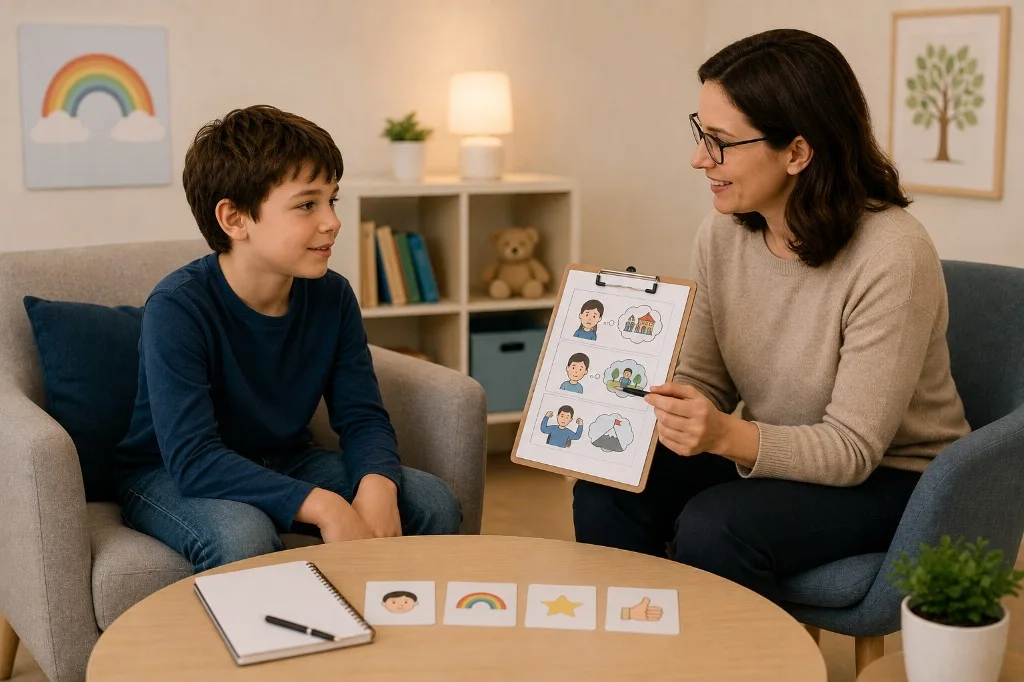
For autistic children, therapy often works best when adapted to their communication style and sensory needs. Clear language, visual supports, predictable structure, and real-life practice can make sessions easier and more useful.
CBT does not “cure autism,” but lowering anxiety can still make everyday life much more manageable for both the child and the family.
Limitations and what we don't know yet
Most studies measured children right after therapy ended, not years later.
Children with significant intellectual disabilities were rarely included, so results may not apply equally to everyone.
Researchers also still do not fully know which CBT formats work best for autistic children or how much follow-up support is needed after the main therapy course.
This is a plain-language summary of: Cognitive behavioural therapy for anxiety disorders in children and adolescents, James A.C, Reardon T, Soler A, et al., Cochrane Database of Systematic Reviews (2020). Source license: CC-BY-NC-4.0.
It is not medical advice — talk to a qualified clinician before changing therapy.