
In one sentence
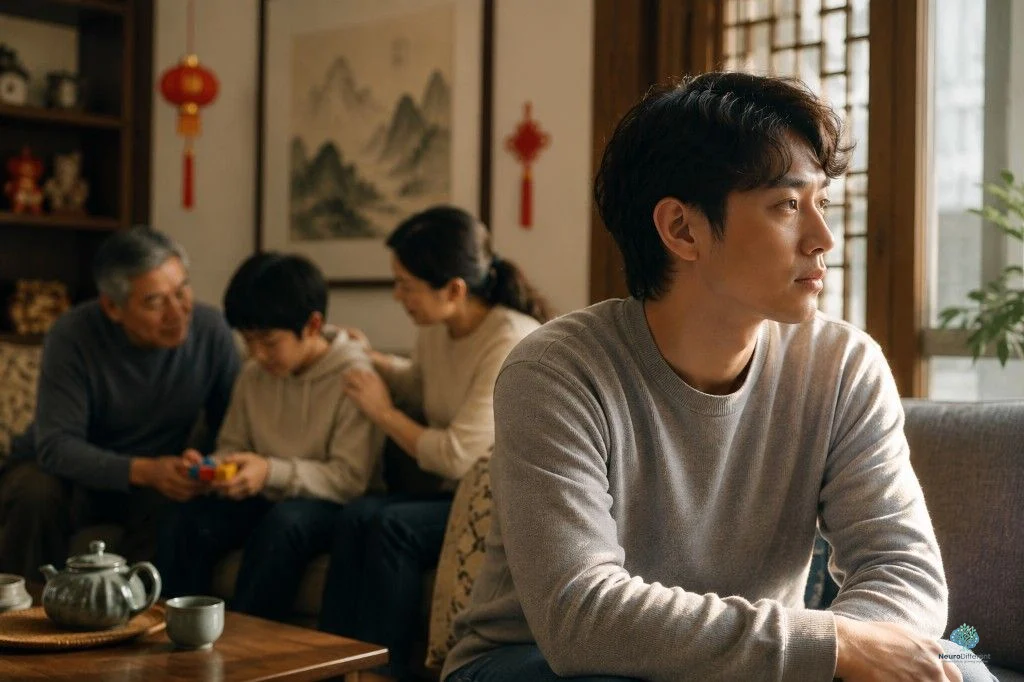
This study suggests that adult siblings of autistic people may experience a mix of responsibility, emotional closeness, loneliness, and pressure to balance family needs with their own personal lives.
What the researchers did
Researchers interviewed eight adults in China who had a brother or sister with autism.
This was not a study about treatment or therapy. Instead, the researchers wanted to understand what everyday family life feels like for siblings growing up alongside autism.
Participants were invited to speak openly about:
- family relationships;
- emotions;
- responsibility;
- future worries;
- and how autism affected their own identity and life choices.
The researchers then carefully looked for common themes that appeared across different personal stories.
What they found
Many participants described a strong sense of responsibility toward their family and autistic sibling.
Some felt that helping and supporting the family was not really a choice, but something naturally expected of them.
At the same time, many participants described a complicated mix of closeness and loneliness. Even when they loved their family deeply, some still felt emotionally isolated or misunderstood.
Another major theme involved balancing support for others with protecting their own personal identity and future.
Some participants talked about:
- delaying personal goals;
- feeling guilty for wanting independence;
- worrying about future caregiving responsibilities;
- while also feeling proud of helping keep the family stable.
The researchers note that family duty and sacrifice are especially important cultural values in many Chinese families, which shaped how participants described their experiences.
What this means for families and therapists
This study is a reminder that autism can affect the whole family, not only the autistic person.
Siblings may also experience:
- stress;
- loneliness;
- pressure to be “the responsible one”;
- or difficulty talking openly about their own feelings.
Sometimes parents and professionals become so focused on the autistic child that siblings quietly carry emotional weight in the background.
Even simple questions like: “How are you doing yourself?” can matter.
For therapists and support teams, the study highlights the importance of paying attention to siblings’ emotional wellbeing, not only practical family support.
Limitations and what we don't know yet
This was a very small study involving only eight people in one country.
It does not tell us how all siblings of autistic people feel, and experiences may look very different in other cultures or families.
The study also cannot answer:
- which kinds of support help siblings most;
- how feelings change over time;
- or how common these experiences are overall.
Researchers say larger studies involving more families and different cultures are still needed.
This is a simplified summary of What adult siblings in China said about duty, closeness, and identity alongside autism by Han F., Gao X., International Journal of Qualitative Studies on Health and Well-being (2026).
Source license: CC-BY-NC.
This is not medical advice. Please consult a qualified professional if support is needed.