
In one sentence
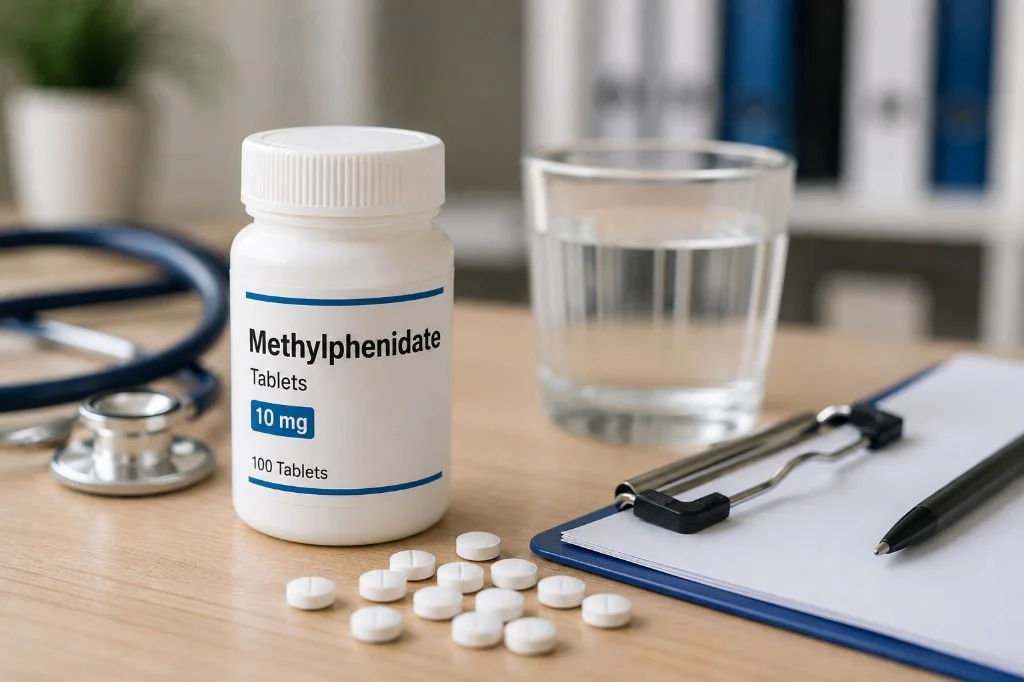
This review suggests that methylphenidate — a common ADHD medication — may help some autistic children become less hyperactive and more focused, but it does not treat autism itself and often reduces appetite.
What the researchers did
Researchers looked for studies where autistic children and teenagers received either methylphenidate or a placebo.
Only four small studies matched the review criteria. Together they included 113 children and teenagers, mostly boys.
The studies mainly focused on ADHD-like difficulties such as hyperactivity, impulsivity, and trouble concentrating. Researchers also checked whether the medication changed core autism-related traits like social interaction or repetitive behaviour.
Treatment periods were short, usually only about a week for each dose level.
What they found
Children taking methylphenidate often became less hyperactive compared with placebo. Parents and teachers also sometimes noticed better attention and calmer behaviour.
The improvements were strongest for hyperactivity. Changes in attention were smaller and less consistent.
The medication did not clearly improve the main features of autism itself, such as social communication or repetitive behaviours. At the same time, the studies did not show strong evidence that those traits became worse.
The most common side effect was reduced appetite. Parents reported eating problems much more often during medication periods than during placebo periods.
No serious side effects were reported in these small studies, but researchers stress that the trials were short and involved relatively few children.
What this means for families and therapists
For some autistic children who also struggle with strong hyperactivity or attention problems, methylphenidate may make daily life, school, or therapy participation easier.
But it is important to understand that this medication is not a treatment for autism itself. Its goal is usually to help with focus, activity level, or impulsive behaviour.
Families starting medication often need to watch closely for changes in appetite, sleep, mood, anxiety, or tics, especially during dose changes.
For therapists and teachers, medication may help a child stay calmer or attend longer during activities, but it does not replace communication support, sensory accommodations, or skill teaching.
Limitations and what we don't know yet
The review only found four small studies, and most lasted a very short time.
Researchers still do not know enough about long-term effects, including growth, heart health, quality of life, or how well benefits continue over months and years.
Most participants were boys from the United States, so results may not apply equally to everyone.
Larger and longer studies are still needed.
This is a plain-language summary of Methylphenidate for children and adolescents with autism spectrum disorder by Sturman N, Deckx L, van Driel M.L, Cochrane Database of Systematic Reviews (2017).
Source license: CC-BY-NC-4.0.
It is not medical advice — talk to a qualified clinician before changing therapy.