
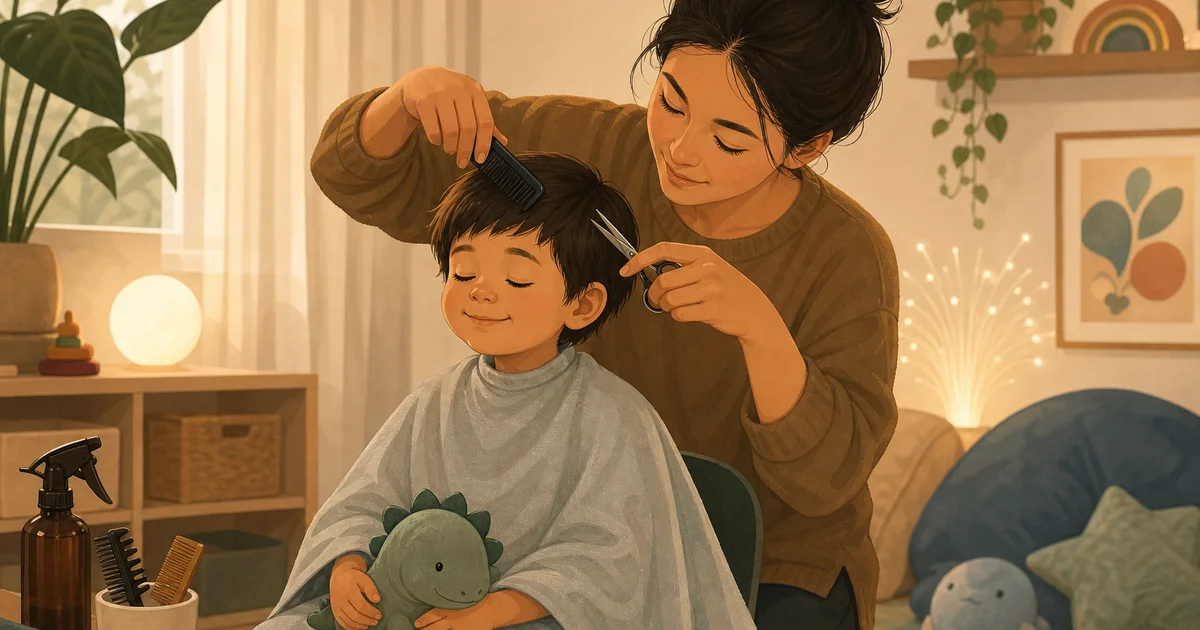
For some autistic children, a haircut is not a quick errand — it is a storm of sound, touch, smell, and unpredictability. Scissors near the ears, cape tightness, strangers talking, buzzers vibrating through the skull: the nervous system may read all of it as danger.
The same logic applies to nail clipping, hair washing, face washing, and tooth brushing. This guide focuses on reducing load and building tolerance in small steps — at home and at the salon.
Why grooming triggers meltdowns
Common sensory triggers:
- Touch — light ticklish contact vs firm pressure; unexpected touch from behind.
- Sound — clippers, running water, hand dryers.
- Smell — shampoo, salon products.
- Position — head tilted back in a sink; being held still.
- Control — someone else decides when it stops.
Autistic children often need to see what will happen and predict when it ends. Open-ended "hold still a little longer" without a visual end point fuels panic.
Prepare before the appointment
At home practice:
- Show photos or a short video of the salon or bathroom routine.
- Use pretend play: brush a doll's hair, clip a stuffed animal's "nails."
- Let the child hold the comb, spray bottle (water only), or turned-off clipper to explore weight and vibration.
- Practice cape or towel over shoulders for increasing seconds.
Choosing where to go:
- Quiet appointment times; ask if a stylist has experience with sensitive children.
- Some families cut hair at home; others find one trusted barber and never switch — consistency is a valid strategy.
- Headphones, sunglasses, or a favorite tablet during the cut help many children.
Tell the stylist clearly: no forced stillness, breaks allowed, minimal chatter if that helps your child.
During the cut — keep the end visible
Use a visual timer or a fixed number of snips before a break ("five more, then pause"). You or the child counts down. Short successful visits beat long traumatic ones; leave with uneven hair if needed and return another day.
Your calm body language is co-regulation. If meltdown starts, stop safely — fighting through teaches that grooming equals trapped distress.
Nail care and tooth brushing
Same ladder as haircuts:
- Touch the tool to the hand or tooth without cutting/brushing.
- One nail or one tooth.
- Preferred position — some children tolerate brushing standing, not lying.
- Same order every time: bottom first, then top; left to right.
Electric toothbrushes help some children and overwhelm others. Flavored toothpaste, silicone finger brushes, or brushing in front of a mirror with a model video can reduce resistance.
When professional help is useful
Occupational therapists often desensitize grooming sequences systematically. Dentists who offer "happy visits" (tour only, no work) build tolerance before cleanings. There is no prize for forcing through pain or terror.
What to avoid
Surprise restraint ("hold them down so we finish"). Bribing with shame ("everyone will laugh at your hair"). Marathon sessions after a child already signaled overload.
Try this week
Practice draping a soft towel over shoulders for ten seconds, then praise and a preferred activity. One tolerated second is progress toward a full haircut.