
"Five more minutes" rarely works when a child cannot hold abstract time in mind. Transitions — stopping a game, leaving the house, bath to bed — are flashpoints because they demand flexibility and language processing at once.
Visual schedules translate time and sequence into pictures the brain can scan quickly. They are among the most practical tools parents can use at home, with or without a formal therapy program.
Why transitions trigger meltdowns
Autistic children often need predictability to feel safe. An unexpected stop feels like a threat, not a reasonable request. Verbal warnings compete with the current activity for attention. When sensory or emotional load is already high, the last straw is often "now we do something else."
Visuals reduce the negotiation. The schedule becomes the authority — neutral, consistent, not your mood on a hard day.
Start with first-then
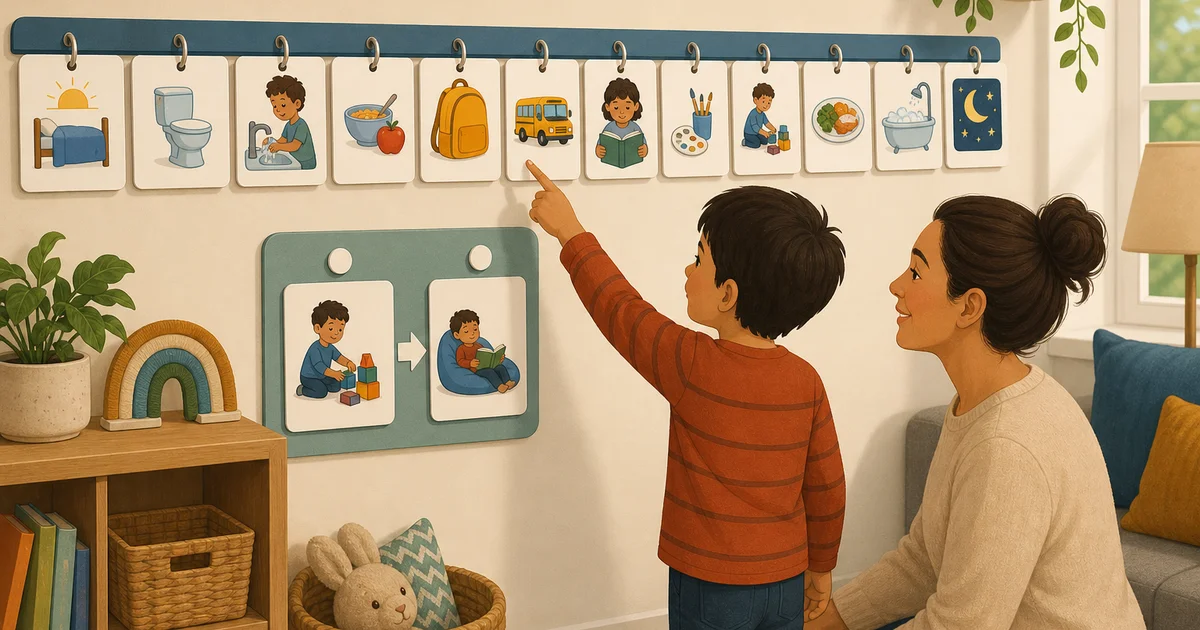
The smallest useful schedule is two pictures:
First (non-preferred or required step) → Then (preferred activity).
Example: First shoes → Then park. First wipe table → Then tablet.
Show both cards. Point. Say one short phrase: "First shoes, then park." Do not lengthen the explanation. Honor the "then" quickly at first so the tool earns trust.
When first-then works, add a third step or a short horizontal strip.
Build a daily picture schedule
A wall strip or binder page with four to six images covers much of a home day:
- wake / breakfast
- sensory play
- walk or movement
- lunch
- quiet time
- bath / bed
Use photos of your child's actual objects and rooms when possible — generic clip art is harder to recognize. Laminate or sleeve cards so you can reorder when plans change.
Review the schedule once in the morning. Point to "now" and "next" without requiring speech.
Now and next cards
Portable two-card holders work for outings and micro-transitions:
- Now: waiting in line
- Next: car snack
Flip the card when the step changes. Many children tolerate difficult moments better when the following reward is visible, not promised in words alone.
Tips that make schedules stick
- Change visuals before changing activity — show the next card, wait a few seconds, then move.
- Keep language minimal — the picture carries the message.
- One consistent symbol for "finished" (check mark pocket, turn card over).
- Involve choice where safe: two "then" options the child picks from.
- Update when plans shift — surprise breaks trust; if rain cancels the park, replace the card and show the new sequence before acting.
Common mistakes
Long verbal chains alongside visuals ("First we need to because tomorrow we have to…") defeat the purpose. Using schedules only on bad days teaches inconsistency. Promising a "then" reward and delaying it teaches that pictures lie — honor small rewards fast while building the habit.
Schedules are not bribery; they are external working memory for a brain that is already full.
When to ask a therapist for help
Occupational therapists and ABA professionals often formalize visual systems for school and clinic. Ask for help if:
- transitions cause daily safety issues;
- your child destroys or ignores every visual you try;
- you need a system that travels to kindergarten or therapy.
They can match complexity to your child's level — object schedules, photo schedules, written lists for readers.
Try this tomorrow
Pick one hard transition. Make two cards: the step and the immediate reward. Use the same words three days in a row. Notice whether resistance drops when the sequence is visible before you move their body.