
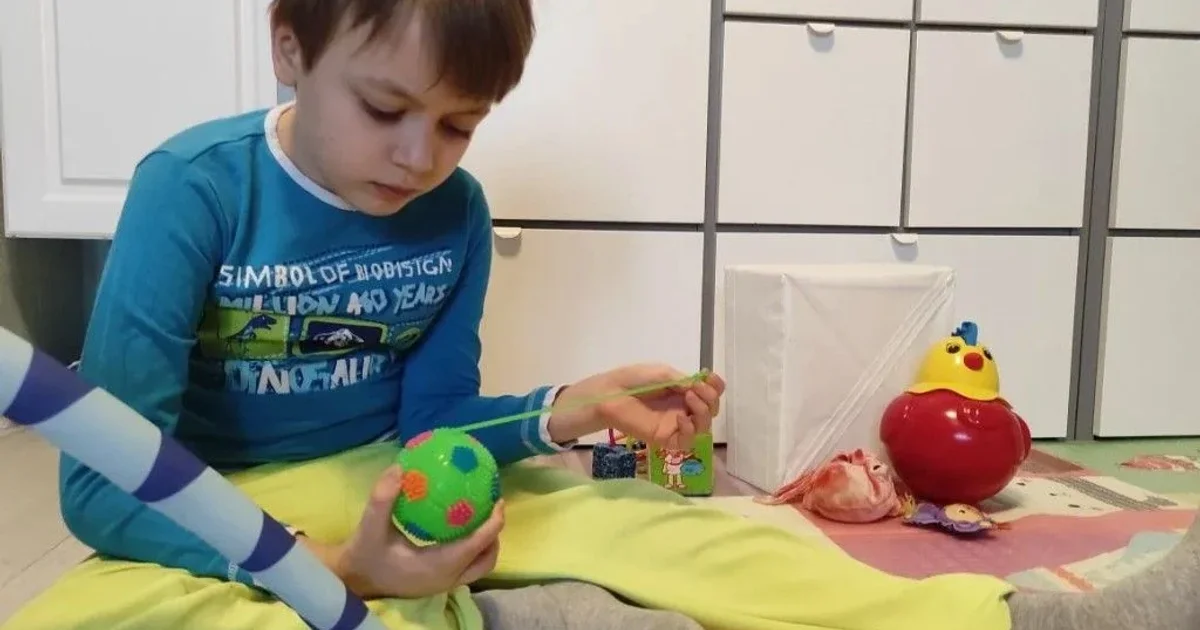
Living with an autistic child at home is rarely about one big problem. It is a chain of small moments: a child who undresses the second you walk through the door, a meltdown that seems to come from nowhere, an afternoon when nothing you suggest holds their attention, or a walk that ends with your child lying on the pavement and you wondering whether you can ever leave the house again. This guide brings those threads together — not as a list of fixes, but as a coherent picture of how home life, sensory needs, communication, and emotional overload connect, and what you can do about each part without turning your home into a clinic or your child into a project.
Key takeaways
Meltdowns are signals, not manipulation. When overload, pain, hunger, or the inability to express a need builds up, the nervous system can no longer cope. Your job in the moment is safety and co-regulation, not winning an argument.
Show more than you explain. Many autistic children learn best through pictures, modeled actions, and repetition. Short visual routines at home reduce frustration and build skills that transfer to daily life.
Predictability lowers resistance. Fixed sequences for dressing, activities, and short walks give the brain less to decode. End outings before overload when you are rebuilding trust outside the home.
Why home life feels different
Parents often arrive at this guide after searching for something practical — what to do with a child at home all day, how to calm a meltdown, why walks have become impossible. The underlying pattern is similar: the world asks autistic children to process language, sensory input, and social expectations faster or more flexibly than their nervous system allows.
At home, that gap shows up in concrete ways. Abstract instructions like “put the laundry away” may not register, while pointing to a basket and modeling the motion works on the third repetition. Play that looks like “doing nothing” with the same toy for an hour may be deeply regulating. Undressing immediately after coming inside may mean the fabric was unbearable for hours, or that “outside clothes” have become linked in the child’s mind with leaving a safe place.
None of this means your child cannot learn or enjoy time with you. It means the format matters: visual input, physical action, sameness, and time to recover between demands.
How autistic children learn at home
Before choosing activities, it helps to internalize one rule that runs through everything below: show, do not over-explain.
For many children, the most reliable supports are a picture, a real object, and a short demonstration — “do it like this” — with the same words each time. One step at a time. Hand-over-hand help when needed, then fade support as the motion becomes familiar. Long verbal lectures during stress or teaching both fail for the same reason: working memory and language processing are already occupied.
This approach applies to sorting colored blocks, wiping a table, and using a communication card during a meltdown. Consistency from you is not rigidity for its own sake; it reduces the number of variables your child must decode.
Building a calm home routine
A structured day at home does not require a therapist-designed program. It requires a handful of repeatable anchors that match your child’s energy and sensory profile.
Sensory play as a foundation
Sensory activities are often the easiest way to help a child stay engaged independently. Fill a container with rice or dry beans, add a cup and spoon, and model scooping and pouring once. If needed, guide their hand through the motion with minimal speech. Variations include pouring water between jugs, hiding small toys in dry material, or any safe texture your child already seeks.
Over weeks, many children spend longer in these activities, stay calmer afterward, and tolerate the next transition better. Sensory play is not a reward for “good behavior”; it is often the bridge that makes the rest of the day possible.
Sorting and structured tasks
Sorting works because the outcome is visible: two containers, red items in one and blue in another, your hand showing the path until theirs takes over. The same logic applies to matching lids to containers or placing spoons in a drawer. Clear beginning, clear end.
Expanding favorite play instead of replacing it
If your child loves animals, trains, or spinning objects, start there. Add one small step to existing play: seat a figure in a chair, “feed” it, cover it with a cloth, hide and find it. The goal is not to impose neurotypical pretend play but to stretch what already motivates them.
Daily-life tasks with visual support
Functional tasks — carrying laundry to a basket, wiping a table with a modeled stroke, taking a cup to the sink — build independence when broken into visible steps. Point to where the item goes. Repeat the same route through the kitchen. Praise the action, not the child’s character.
Guided screen time
Tablets need not be the enemy. Short videos, simple cause-and-effect apps, and occasional co-play (“press together,” “your turn”) can be connection as well as downtime. The distinction is passive endless scrolling versus bounded, shared use as part of a schedule.
A sample visual cycle
Many families stabilize the day with a picture sequence such as: sensory play, sorting or a structured task, movement (indoor jumping or a very short walk), bounded tablet time, then quiet play. Picture cards for “now” and “next” reduce negotiation. Adjust length to your child; a cycle that works at nine in the morning may need to be shorter by late afternoon.
Meltdowns: understanding and responding
Meltdowns and tantrums look similar from the outside. Internally they often differ. A tantrum may be goal-directed; a meltdown is frequently a flood — pain, sensory overload, exhaustion, hunger, or a plan change the child cannot metabolize — when there is no bandwidth left to comply.
Common triggers to scan for
Before reacting, run a quick mental checklist: physical pain (headache, stomach, teeth), noise or light, fatigue, thirst or low blood sugar, an unexpected transition, or an unmet need the child cannot name. Treat the meltdown as data about the environment and body, not as defiance.
During a meltdown
Stay safe first. If you suspect pain and your clinician has approved it, a appropriate analgesic is reasonable; sometimes relief arrives within minutes and confirms the cause.
If your child accepts touch, firm deep pressure — a strong hug, weighted blanket, or slow rocking — can help the nervous system feel bounded. If they push away, respect that; proximity without demand is better than forced contact.
Use minimal language: “I’m here,” “You’re safe,” “I’ll help.” Long reasoning will not land.
Visual cards for drink, food, toilet, break, or hug give a non-speaking child a way to choose without speech. Hold them up; wait.
Gentle redirection sometimes helps after the peak: water on hands, a familiar cartoon, fresh air. Water in particular acts as a reset for many children.
Offer water and a simple snack if there has been a long gap since eating. Low blood sugar mimics emotional dysregulation in any child.
Your tone is co-regulation. You are not failing if the meltdown continues for a while; you are failing if you treat it as intentional manipulation and escalate shame or force.
Prevention at home
Prevention beats crisis management. Regular meals and sleep, daily movement, and known sequences for hard transitions reduce baseline load. Watch for early signs — irritability, withdrawal, intensified stimming — and move toward rest or sensory relief before the explosion.
Keep a personal “rescue list” of what usually works for your child: water, snack, pressure, specific video, short walk. Different days may need different tools; the list is a reminder that you have options, not a guarantee.
Clothing, comfort, and the home–outside divide
Clothing battles are often sensory and associative, not moral. Seams, tags, elastic, and temperature dominate how fabric feels. Separately, a child may learn: shoes and jacket mean leaving; arriving home means freedom to undress.
Introduce soft home clothes that look and feel clearly different from outside clothes. Avoid putting on coats and shoes long before the door. Gather calmly, dress for outside, leave immediately — so outdoor gear stays linked to going out, not to hours of waiting.
Practice staying dressed for two to five minutes, then praise specifically: “You kept your T-shirt on — well done.” If they undress, redress calmly without a lecture. Some children prefer heavier hoodies, soft cotton layers, or compression garments; follow their comfort, not fashion.
A morning sequence — wake, home clothes, breakfast, play — decouples getting dressed from the threat of transition. Change happens in minutes of success stretched over weeks, not in one forced afternoon.
When going outside feels impossible again
Some parents stop walking with an older or heavier child after public meltdowns where the child drops to the ground, screams, and cannot be moved. Fear is rational: the situation feels uncontrollable, strangers stare, and force does not work.
What is happening is still overload, protest, avoidance, or the only available “no” — not spoiling. Fighting the scene — pulling, shaming, lengthy persuasion — usually prolongs it. Prevention and graded exposure work better than winning a standoff on the pavement.
Keep initial outings to five or ten minutes and end before meltdown signs appear. Three calm minutes beat an hour that ends in crisis. Use a fixed script: out the door, walk to a visible point, turn back. Same route repeatedly beats spontaneous wandering for many autistic children.
If they are already on the ground, avoid sudden pulling. Step back slightly, breathe, reduce your emotional volume, and wait for the peak to pass. Rebuild with micro-steps: open the door, stand on the step, return inside; next day, two steps down the path, then home. The goal is restoring “outside can be safe,” not distance records.
Go at quieter times, choose calmer routes, and bring another adult when possible. That is logistics, not weakness.
Communicating with the world beyond your door
Inside the home you can control lighting, noise, and pace. In shops, airports, or playgrounds you cannot. Short messages on a cap or T-shirt — “I am non-speaking,” “I need more time,” “Please do not touch” — can shift strangers from judgment to patience. Messages about running off or difficulty with speech can matter in emergencies.
This is optional. Some families find it relieving; others dislike labeling their child in public. Use phrases for support and safety, not to apologize for who your child is. NeuroDifferent’s clothing line explores this idea for families who want it; it is a tool, not an obligation.
Visual cards belong in the same toolkit: portable, dignified, and under the child’s control when they can choose among options.
Common mistakes worth avoiding
Trying to reason at full volume during a meltdown teaches nothing; the learning brain is offline. Equating meltdown recovery with “giving in” misses the neurological reality — relief is regulation, not a reward for bad behavior.
Forcing outdoor clothes early in the day “to get used to them” often increases undressing battles. Marathon persuasion about staying dressed creates a new emotional layer on top of sensory pain.
Dragging a child who has shut down on a walk damages trust in the outside world. Skipping outside entirely for months is understandable but can leave both of you stuck; graded return works slower but lasts longer.
Replacing your child’s preferred play with what you think they “should” enjoy removes the easiest motivation you have. Banning all screens without offering structured alternatives can remove a rare self-regulation tool.
When to add professional support
This guide stays in the lane of daily parenting. If meltdowns are frequent enough to block sleep, school, or safety, or if you suspect untreated pain or mental health crisis, involve your pediatrician or existing therapists. Applied behavior analysis, occupational therapy, and speech therapy can formalize communication systems and sensory diets; they extend what you start at home, not replace your relationship.
Peer support for parents — even informal — reduces isolation. Research on parent groups suggests emotional value even when stress scores barely move; feeling less alone is not trivial.
FAQ
Is a meltdown the same as a tantrum?
Not always. Tantrums may be goal-directed; meltdowns are often nervous-system overload when demands exceed capacity. The support strategies differ — co-regulation and removing load, not bargaining.
My child undresses constantly at home. Should I punish it?
Usually punishment adds stress without fixing sensation or learned association. Work on separate home clothes, fabric comfort, short practice intervals, and decoupling outdoor gear from long waits.
How long should activities at home last?
Follow your child’s stamina. Two minutes of successful sorting beats twenty minutes of struggle. Extend gradually as engagement grows.
We have not walked outside in months. Where do we start?
One step outside and back inside, repeated on calm days, then two steps, then five minutes on a fixed route. End early while it still feels safe.
Are labels on clothing necessary?
No. They help some families in crowded or high-stress settings; others prefer cards, phone notes, or no public explanation. Match your child’s dignity and your comfort.
How much tablet time is reasonable?
Boundaries matter less than structure: known start and end, content you approve, occasional shared use. A visual timer or “one more video then sensory play” sequence reduces fights.
What if my child is non-speaking and cannot use cards yet?
Start with two choices held up physically — drink or break — and honor pointing, reaching, or leading your hand. Model without requiring speech.
Does a strict routine mean no spontaneity ever?
It means predictable anchors inside which small variations can happen once baseline calm exists. Surprise works better when trust is already high.
Further reading
These sibling articles go deeper on single topics from this guide:
- How to calm a child during a meltdown
- What to do with an autistic child at home
- When you're afraid to go outside
- Staying dressed at home
- Clothing labels as communication
- Clothing for autistic people: what exists and what is missing
- Parent-mediated early intervention — evidence on teaching parents structured strategies
- Our story — why NeuroDifferent exists
Conclusion
You do not need to solve every hard moment at once. Pick one thread this week: a five-minute sensory bin before lunch, a two-minute “dressed at home” practice, or a walk to the gate and back. Notice what lowers overload for your child and repeat that on purpose. Daily life with autism at home is built from those repetitions — not from a perfect plan on day one, but from a direction you can sustain.