
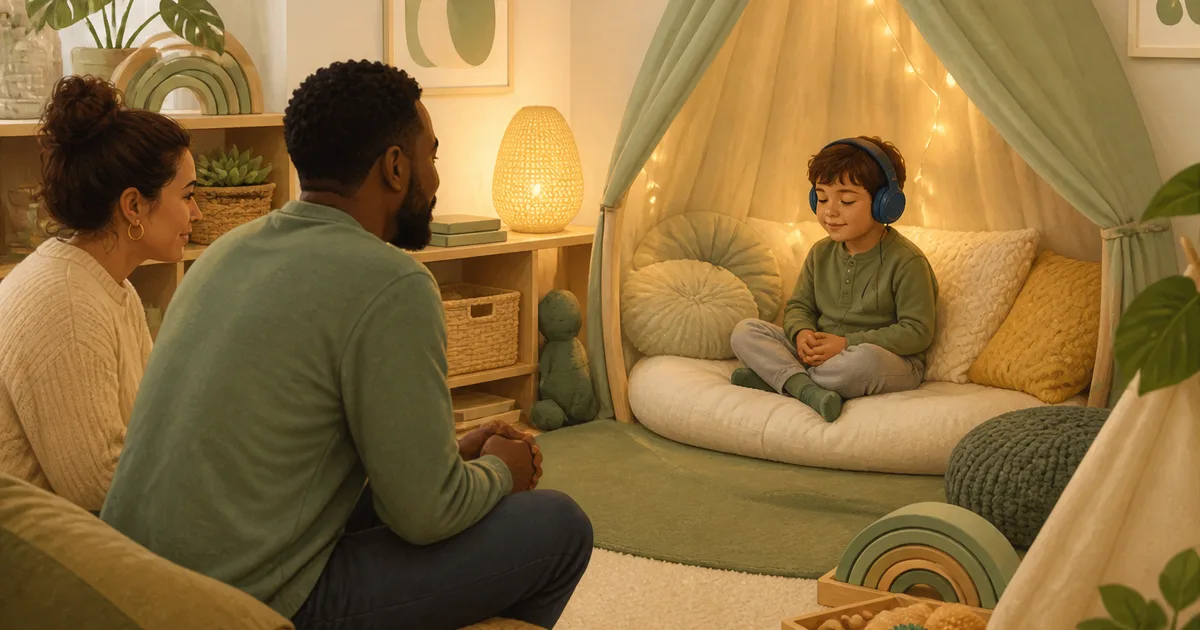
Sensory differences are one of the most consistent features of autism — and one of the easiest for adults to misread as “pickiness,” defiance, or drama. A fluorescent hallway can feel like a migraine. A clothing tag can feel like a wire. A cafeteria can erase the day’s learning before the first lesson. This guide is for parents, caregivers, and therapists who want a practical map of sensory processing in autistic children and teens: what it is, how it looks, what helps without forcing tolerance that costs trust, and when to bring in occupational therapy or medical care. It is not a diagnosis tool and not a substitute for urgent help when pain, injury, or severe distress is present.
Key takeaways
Sensory is neurological, not attitude. Preferring silence, soft clothes, or firm pressure is information about a nervous system — not a character flaw to extinguish.
Overload often looks like behaviour. Meltdowns, shutdowns, refusal, and “sudden” aggression frequently follow unpaid sensory debt, not a desire to control adults.
Seeking and avoiding can coexist. The same child may chase spinning and flee vacuum noise. Profiles are mixed and change with sleep, illness, and stress.
Change the environment before “desensitising” everything. Reducing pain and unpredictability usually unlocks learning faster than flooding a child with the thing that hurts.
Sensory needs sit under eating, sleep, school, and anxiety. Pair this guide with food selectivity, sleep, school support, and anxiety pillars when those domains dominate.
What sensory processing means here
Everyone filters. Autistic nervous systems often filter differently: some channels feel louder (hypersensitivity), some quieter (hyposensitivity), and some pull the person toward more input (seeking) or away from it (avoiding). Many clinicians also talk about sensory modulation — staying in a workable “band” of arousal — and sensory discrimination — knowing where a touch came from or how hard to press a pencil.
You do not need a perfect label to help. You need a working hypothesis: which inputs cost the most, which restore, and how the day’s budget runs out.
Why sensory load is so high for autistic kids
Schools and public spaces were built for average sensory budgets. Overhead lights, overlapping voices, bells, PE echoes, scratchy uniforms, perfume corridors, and rapid transitions stack costs that neurotypical peers often ignore.
Autistic attention may also lock onto detail — a flickering bulb, a classmate’s gum, the hum of a projector — so background becomes foreground. When adults say “just ignore it,” they may be asking for a skill the child does not have that day.
Illness, puberty hormones, poor sleep, hunger, and anxiety shrink the budget further. A child who tolerated a haircut last month may not tolerate it after a week of exams. That is not inconsistency for its own sake; it is a nervous system under different load. See haircuts and grooming and sensory hyperacusis predicting adolescent anxiety.
How sensory differences show up day to day
Sound
Covering ears, screaming at hand dryers, fleeing assemblies, or needing the same song on loop. Some children speak loudly because they do not feel their own volume. Others whisper because every voice feels like shouting. Noise-cancelling headphones, quieter lunch options, and advance warning before fire drills are supports, not spoiling.
Touch and clothing
Tag cutting, seamless socks, specific fabrics only, refusal of sticky hands or glue. Hair washing and dental visits can feel like assault. Offer choice of textures; never force “get used to it” as the only plan.
Light and vision
Squinting under LEDs, preferring dim rooms, distress at flashing screens or patterned floors. Sunglasses indoors, lamp light instead of overheads, and matte materials can change a whole morning.
Movement and balance
Constant rocking, spinning, crashing into sofas — or fear of swings and uneven ground. Both seeking and avoiding vestibular and proprioceptive input are common. Safe crash pads and movement breaks beat “sit still and learn.”
Smell and taste
Gagging at cooking smells, eating only beige foods, or craving intense flavours. This is a major pathway into selective eating and ARFID-risk patterns — see food selectivity.
Interoception
Missing hunger, thirst, toilet cues, or pain until the body is already in crisis. Visual schedules for bathroom and drink breaks can prevent meltdowns that look “out of nowhere.” Tie this to toilet training when relevant.
Sensory overload, meltdowns, and shutdowns
When input exceeds capacity, the child may explode (meltdown), freeze or go quiet (shutdown), or flee. Afterward they may need long recovery — dark room, silence, familiar media — not a lecture. Adults who punish the exit teach the child to hide distress until it is larger.
Prevention beats crisis scripts. Track early signs: humming louder, covering ears, pacing, echolalia loops, refusal of previously OK tasks. Build exits into the day before the cliff. Our meltdown calm-and-prevent guide pairs with this section.
Chronic unpaid overload feeds autistic burnout and anxiety. Sensory pain that adults dismiss becomes trauma.
Sensory seeking and “stimming”
Rocking, flapping, humming, chewing, spinning, and watching water or wheels are often regulation tools. They can also be joy, communication, or focus aids. Blocking stims to look “ready to learn” frequently raises arousal and reduces learning.
Safer redirection (chewable jewellery instead of shirt collars; trampoline instead of climbing shelves) is different from elimination. Ask: is this harming anyone, or only making adults uncomfortable?
What usually helps at home
Start with an audit, not a shopping cart of sensory toys. Walk the child’s day: wake, clothes, breakfast sounds, commute, after-school, homework, bath, bed. Note three highest costs and three reliable restores.
Reduce costs: softer lighting, predictable mealtime setup, advance warning before vacuuming, clothing the child can tolerate for school photos without a war. Increase restores: movement before homework, deep pressure if wanted (weighted items only with guidance and child consent), quiet corners that are truly quiet.
Predictability is sensory medicine. Visual schedules and transitions lower surprise. Daily life at home covers routines that keep load visible.
Do not hide exposure inside “fun surprises.” Consent and countdown matter for haircuts, nail clipping, and medical visits — see medical visit preparation.
What usually helps at school
Share a one-page sensory profile with school: top triggers, early warning signs, allowed tools (headphones, fidget, movement pass), and a quiet space that is not used as punishment. Accommodations are equity, not favouritism.
Ask about lunch noise, PE changing rooms, assemblies, and substitute-teacher days — classic overload traps. Pair with school support. If the child masks all day and detonates at home, treat that as evidence the school budget is spent, not proof school is fine.
How therapists and ABA programmes can respect sensory needs
Behaviour plans that ignore sensory pain teach compliance under duress. Before targeting “escape,” ask what the child is escaping. Loud clinics, scratchy mats, and fluorescent rooms are clinical variables.
Build sensory regulation into the session schedule: movement breaks, choice of seating, volume control, and ending before the cliff. Prefer assent-based pacing. When writing goals, separate skill acquisition from sensory endurance — do not make “tolerate hand dryer for five minutes” the centrepiece of dignity.
Coordinate with occupational therapy when available. OT is not magic; it is structured assessment of sensory preferences and environmental fit. Avoid programmes that promise to “cure” sensory issues through aggressive exposure alone.
Session checklist worth keeping visible: Is the room quieter than the child’s morning already was? Did the child choose a regulation tool before demand rose? Are escape routes labeled as support rather than failure? If data show “noncompliance” only in bright or noisy conditions, fix the condition before stacking consequences.
A note for siblings and co-parents
Siblings often live inside the same loud mornings and the same emergency exits. Explain sensory needs in plain language without casting the autistic child as the villain of every plan: “Their ears hurt in the cafeteria; we use headphones so everyone can finish lunch.” Give siblings a quiet corner too, and protect one-to-one time that is not only about autism logistics. See explaining autism to siblings.
Co-parents and grandparents need the same one-page profile. Inconsistent rules (“headphones only with Mum”) recreate daily overload. Align on three non-negotiables: early exits are allowed, no punishment for covering ears, and medical pain is checked before behaviour labels.
Links to eating, sleep, anxiety, and masking
Selective eating is often sensory first. Sleep collapses when the body cannot downshift after a loud day — see sleep problems. Anxiety climbs when the world feels physically unsafe — see anxiety guide. Masking sensory distress to look fine burns capacity — see masking guide.
Treat these as one system. A new bedtime routine will fail if the afternoon is still a sensory marathon.
Ages and stages: preschool to teens
Preschool. Clothing battles, bath fear, and playground overwhelm dominate. Keep goals tiny: one tolerable outfit rotation, one predictable bedtime sensory wind-down, one trusted escape from birthday-party noise. Parallel play near quieter edges of the playground often beats forced group games.
Primary school. Assemblies, PE echoes, handwriting pressure, and cafeteria noise become the main drains. Negotiate a movement pass and a lunch alternative early in the year, before the child is labelled “avoidant.” Teachers need the early-warning list in week one, not after the first meltdown report.
Adolescence. Hormones, social evaluation, and heavier academic load shrink tolerance. Headphones may become identity as well as tool — discuss social stigma openly. Hyperacusis and social anxiety can amplify each other; see hyperacusis and adolescent anxiety. Teens need veto power over exposure plans or they will mask harder and crash later.
Across ages. Illness, travel, daylight saving, and substitute caregivers reset the budget. Re-teach the plan after disruptions instead of assuming last month’s tolerance still applies.
What research currently supports (and what it does not)
Research consistently finds elevated rates of atypical sensory responsiveness in autism across sound, touch, and multisensory integration. Links appear between sensory burden and anxiety, sleep disruption, and daily participation. That supports treating sensory load as a core clinical and educational variable — not a fringe preference.
What research does not support is a single miracle protocol, aggressive one-size exposure programmes, or supplement stacks sold as “sensory cures.” Evidence for specific occupational-therapy packages varies by method and outcome measure; the most transferable finding for families is still environmental fit plus assent-based practice. When reading studies, prefer those that measure real-life participation (eating, school attendance, sleep) over lab tasks alone.
Common mistakes
Flooding without consent. Forced exposure to noise or textures can create trauma and stronger avoidance.
Confiscating regulation tools. Taking headphones or stim toys as punishment for overload is backwards.
One-size sensory diets. What calms one child overstimulates another. Test and observe.
Blaming parents for “overprotecting.” Reducing pain is parenting. Gradual practice can come later, with the child as partner.
Ignoring medical pain. Ear infections, migraines, reflux, and dental issues masquerade as “behaviour.” Rule them out.
Practical starting plan (two weeks)
Week one: pick the single highest daily cost (often clothing, lunch noise, or after-school homework under LEDs) and change one environmental variable. Add one restore the child already likes.
Week two: write early-warning signs and an exit plan shared with school or caregivers. Track sleep, meltdown frequency, and the child’s own comfort words. If nothing moves, do not add three new gadgets — revisit whether the change was too small, whether illness is present, or whether OT/medical assessment is due.
FAQ
Is sensory processing disorder the same as autism?
No. Sensory differences are common in autism but also occur without an autism diagnosis. Many autistic people meet informal “SPD” descriptions; formal labels and access to OT vary by country.
Will my child grow out of it?
Profiles often shift with age, sleep, and environment. Some sensitivities soften; others stay. Adults still use headphones and clothing strategies — that is adaptation, not failure.
Are weighted blankets safe?
Only with appropriate weight guidance, supervision for younger children, and the child’s ability to remove the blanket. Never use as restraint.
Should we force foods for “exposure”?
Not as battles. Safe, gradual, consent-based exploration with nutrition monitoring is different from hiding food or forcing bites. See the food selectivity guide.
Do noise-cancelling headphones isolate my child socially?
They can reduce pain so social energy remains. Plan headphone-free windows when the environment is quieter rather than banning tools that make school survivable.
How is this different from ADHD sensory seeking?
Overlap is huge; dual diagnosis is common. ADHD seeking often pairs with impulsivity and working-memory load; autism more often pairs with specific modality sensitivities and routine needs. Assess both.
When do we need occupational therapy?
When sensory issues block eating, sleep, hygiene, school attendance, or safety — or when home strategies are stuck. Ask for autism-informed OT, not only generic “sensory integration” marketing.
Can sensory overload look like aggression?
Yes. Pain and panic can look like hitting or biting. Safety plans should reduce triggers and teach exits, not only punish the behaviour.
Further reading
Practical companions: haircuts and grooming, food selectivity, visual schedules, school support, anxiety, meltdowns, burnout, and hyperacusis research digest. For home infrastructure: daily life at home. For fabric, uniforms, and what the clothing market still lacks: clothing for autistic people.
Conclusion
Sensory processing differences are not a side quest in autism — they are often the stage on which learning, eating, friendship, and mental health play out. The most reliable wins come from believing the child’s signals, cutting avoidable pain, protecting recovery time, and teaching skills inside a body that feels safer. This week, change one costly input and protect one restore. Then invite school or a therapist onto the same map so the child is not alone with a world that sounds and feels too loud.